
Google Just Changed E-commerce Forever
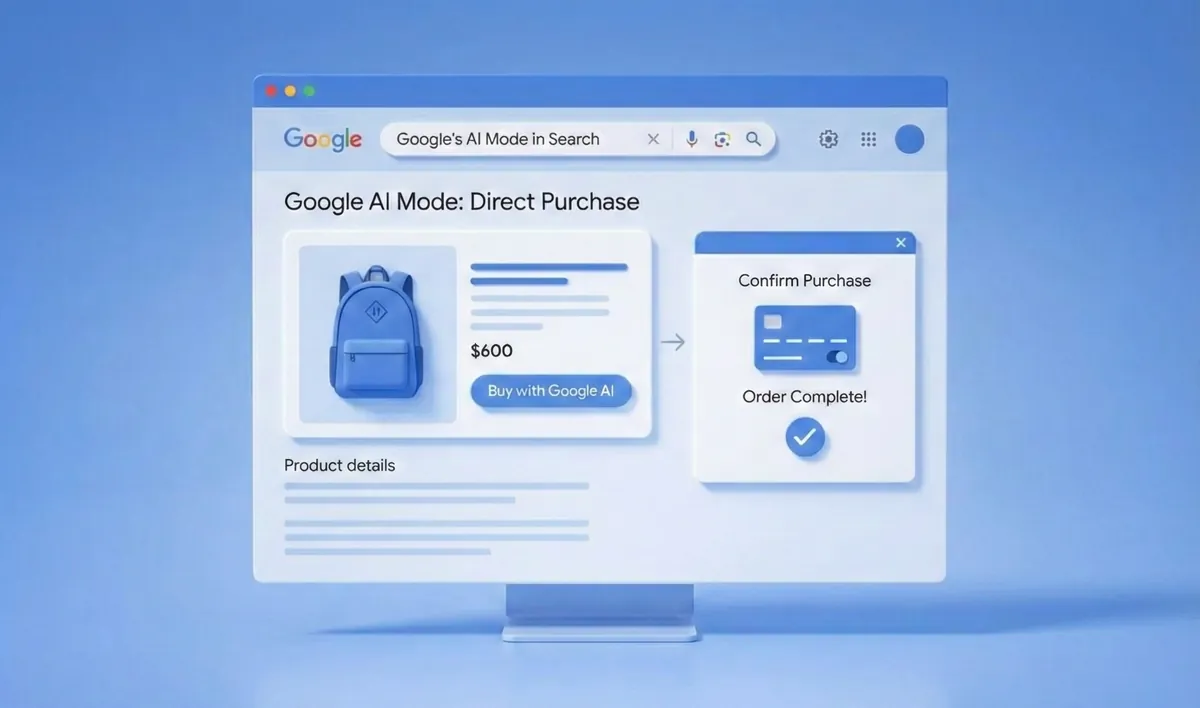
On January 11, 2026, Sundar Pichai announced the Universal Commerce Protocol (UCP) at the National Retail Federation convention. The pitch is simple: AI agents can now browse, compare, and purchase products directly through conversational interfaces like Gemini or Google's AI Mode in Search. No website visit required.
Shopify, Etsy, Wayfair, Target, and Walmart co-developed it. Visa, Mastercard, Stripe, and PayPal are on board. OpenAI has its own competing protocol with Stripe. This is happening.
So the question everyone's asking: does my e-commerce site still matter?
The short answer is yes. The longer answer is that it matters more than ever, but for different reasons than before.
Why Your Site Still Matters
There's a fundamental misunderstanding in the "AI will replace websites" narrative. It assumes people buy products purely on specs and price. They don't.
People Buy Stories, Not Just Products
When someone buys from Patagonia, they're not buying a jacket. They're buying into environmental activism, durability, and a certain lifestyle. When someone chooses a handmade ceramic mug from an Etsy seller over a mass-produced Amazon alternative, they're buying the maker's story.
An AI assistant can tell you which jacket has the best warmth-to-weight ratio. It can compare prices across retailers in seconds. What it can't do is make you feel something about a brand. That emotional connection happens on your site, through your design, your photography, your copywriting, your brand voice.
As automated shopping commoditizes the comparison experience, the brands that create genuine emotional resonance will have an even bigger advantage.
SEO Isn't Dead, It's Evolving
Here's what many people miss: for these systems to recommend your products, they need to understand them. And how do they understand them? Through structured data, clear product descriptions, and well-organized content. Sound familiar? That's SEO.
We're moving from SEO (Search Engine Optimization) to AEO (Answer Engine Optimization). The underlying principles remain the same: help machines understand your content so they can surface it to relevant users. The UCP protocol itself relies on structured data. Merchants publish their capabilities via a .well-known/ucp endpoint with JSON manifests. If your product data is a mess, conversational commerce tools can't sell your stuff.
The Trust Problem Automation Can't Solve
Would you let an AI spend $2,000 on a laptop for you without ever seeing the retailer's site? Most people wouldn't. There's a trust threshold that increases with purchase value and product complexity.
For commodity items where brand is irrelevant, sure, automated systems will handle those transactions. But for considered purchases, where quality, returns policy, customer service, and reputation count, people will still want to verify. They'll land on your site. The question is what experience greets them when they do.
What to Optimize Now
The UCP announcement is a wake-up call, but not for the reasons you might think. It's not about scrambling to integrate with every protocol. It's about getting the fundamentals right.
Content Quality Over Flashy UX
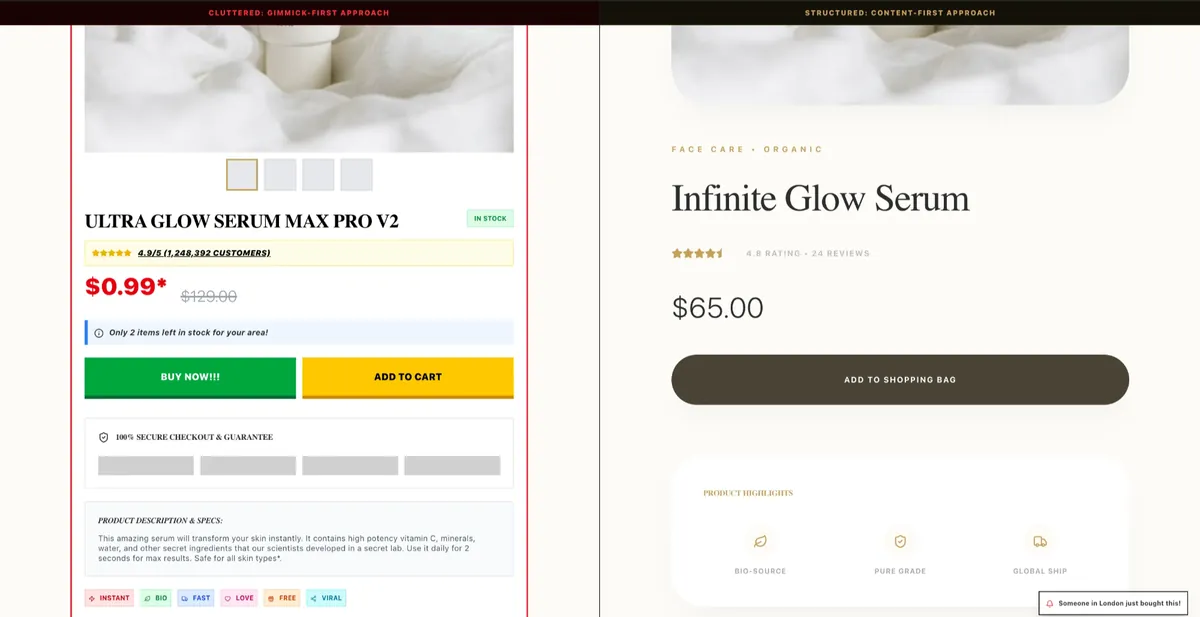
I've seen too many e-commerce sites that prioritize visual gimmicks over clear information. Parallax scrolling, autoplaying videos, complex animations. All that stuff that makes page speed crawl and frustrates users trying to find basic product information.
In an AI-first world, this becomes an even bigger liability. These systems parse your product data. If that data is buried under layers of JavaScript and hidden behind interactions, it's invisible to them.
Prioritize:
- Clear, comprehensive product descriptions
- Accurate specifications and attributes
- High-quality images with descriptive alt text
- Transparent pricing and availability
- Structured data markup (Schema.org Product, Offer, etc.)
Clean Up Your Product Data
This is the unsexy work that pays dividends. Every product should have:
- A unique, descriptive title
- Complete attributes (size, color, material, dimensions)
- Accurate inventory status
- Clear pricing including any variants
- Category information that makes sense
If your product feed is inconsistent, with missing attributes, outdated prices, or broken images, you're hurting both your Google Shopping performance and your visibility to conversational commerce platforms.
Invest in Your Brand Story
This might seem contradictory to the "focus on content" advice, but it's not. Your brand story isn't the flashy homepage animation. It's the consistent voice in your product descriptions, the values communicated through your about page, the photography style that makes your products recognizable.
As automation handles more transactional discovery, the brands that succeed will be the ones people specifically ask for. "Find me a Patagonia jacket" beats "find me a warm jacket" for Patagonia. Building that brand preference requires a website that communicates who you are.
The New E-commerce Landscape
Let me be clear about what's actually changing. AI-powered shopping represents a new channel, not a replacement for existing ones. Think about it like the shift to mobile: it didn't kill desktop e-commerce, it added another way for customers to reach you.
The merchants who will thrive are those who see UCP and similar protocols as additional distribution channels. Your website remains your home base, your brand hub, the place where you control the experience. Conversational commerce becomes another way to reach customers who might never have found you otherwise.
What This Means for Shopify Merchants
If you're on Shopify, you're in a good position. Shopify co-developed UCP with Google, which means tight integration is coming. Your Shopify product data will likely be the foundation for these new shopping experiences.
Take time to audit your catalog. Fill in missing fields. Write proper descriptions. Add structured data through your theme or apps. This groundwork will pay off as conversational commerce scales.
The Bottom Line
AI won't kill your e-commerce site. But it will expose the sites that were already weak: thin product content, messy data, no brand differentiation, poor user experience.
Keep investing in your site as your brand home. Get your product data in order. And most importantly, build a brand worth asking for by name.
The Universal Commerce Protocol isn't a threat. It's an opportunity to reach customers in new ways. But only if your foundation is solid.